

Identifying vinyl record pressings is fundamental to serious collecting, yet remains one of the most challenging skills for newcomers to master. Two copies of the same album can differ in value by hundreds—or even thousands—of dollars based solely on manufacturing origin and pressing details.
This technical guide teaches you how to identify vinyl pressings using traditional techniques (matrix codes, label analysis) and modern AI-powered visual recognition tools. Whether you’re evaluating records at a fair or cataloging your personal collection, mastering these methods is essential.
Quick Identification Checklist
✓ Check matrix runout codes in the dead wax
✓ Examine label design, typography, and color variations
✓ Note catalog numbers and country of manufacture
✓ Look for mastering engineer stamps (e.g., “RVG”, “RL”)
✓ Cross-reference physical details with database records
✓ Use AI visual recognition for instant confirmation
Why Pressing Identification Matters
A single album release can have hundreds of pressing variants:
- First pressings from the original master tapes.
- Reissues from subsequent decades using different (sometimes superior) mastering.
- Audiophile editions from specialty labels like Mobile Fidelity or Analogue Productions.
- Regional variants manufactured in different countries with varying quality.
The difference is not academic. A first UK pressing of Led Zeppelin I on Atlantic may sell for $500+, while a later US reissue of the same album might fetch $15. The cover and label look nearly identical—the devil is in the details.
Method 1: Matrix Runout Codes
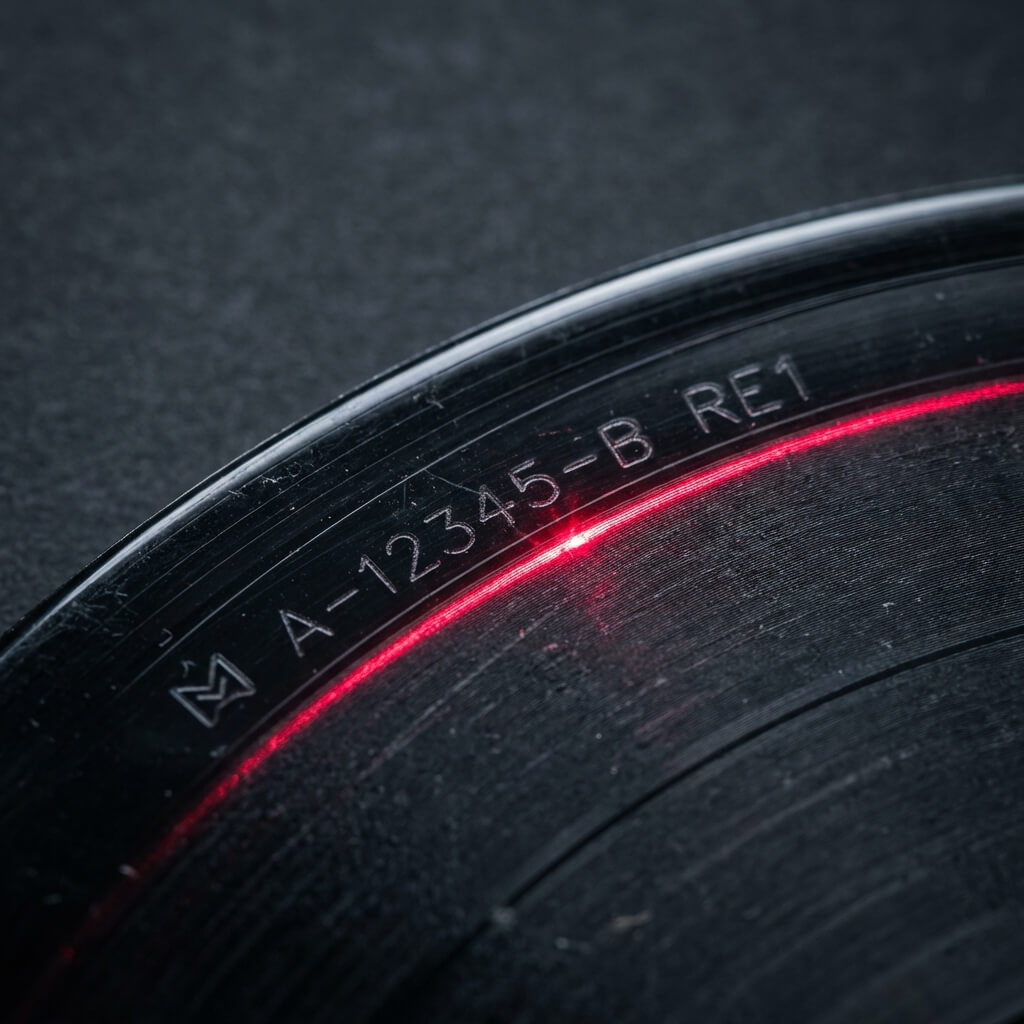
The most reliable identification method involves reading the matrix runout—the smooth area between the innermost groove and the label.
What Matrix Codes Contain
| Element | Meaning |
|---|---|
| Catalog Number | Identifies the release within a label’s catalog. |
| Side Indicator | A/B, Side 1/Side 2, or similar. |
| Master Version | Indicates which lacquer cut was used (e.g., A-1, A-2). |
| Pressing Plant Code | Identifies the manufacturing facility. |
| Engineer Stamps | Initials of mastering engineers (e.g., “RVG” for Rudy Van Gelder). |
How to Read Matrix Codes
- Hold the record at an angle under bright, direct light (LED flashlight works best).
- Locate etched or stamped characters in the runout area—both hand-etched and machine-stamped.
- Note all elements: Complete code strings are more reliable than partial information.
- Cross-reference against databases like Discogs or specialized pressing guides.
This method is accurate but time-consuming, particularly in environments without optimal lighting conditions like record fairs or thrift stores.
Method 2: Label Variation Analysis
Record labels evolved over time. By studying label design details, collectors can narrow down production periods:
- Logo changes: Subtle redesigns occurred across decades (e.g., Capitol rainbow vs. purple labels).
- Address variations: Label headquarters moved, and address formats changed.
- Copyright notices: Legal text evolved with legislation updates.
- Color and typography: Manufacturing processes and brand guidelines shifted.
Collectors specializing in specific labels (Blue Note, Vertigo, Apple Records) develop expertise in these micro-variations that can pinpoint manufacturing years with precision.
Method 3: Physical Characteristics
Additional identification markers include:
- Vinyl weight: Early pressings often used heavier vinyl (140g–180g).
- Edge profiles: Some pressing plants produced distinctive edge finishes.
- Label adhesion: Certain eras used different label application methods.
- Inner sleeve design: Original inner sleeves can confirm pressing authenticity.
These methods require hands-on experience and are impractical for remote or high-volume identification scenarios.
Method 4: AI Visual Recognition
DiscSnap was built to address the limitations of manual identification:
How AI Vinyl Identification Works
- Image Capture: Point device camera at cover or label.
- Multi-Feature Analysis: AI simultaneously processes:
- Cover artwork patterns and printing variations
- Label typography, layout, and color schemes
- Visible catalog numbers and text elements
- Barcode presence (or absence on older pressings)
- Database Matching: Results ranked by confidence, typically surfacing correct pressing within seconds.
Advantages Over Manual Methods
- Speed: Seconds vs. minutes per record.
- Consistency: Eliminates human transcription errors.
- Scalability: Practical for processing large collections or inventory.
- Accessibility: No specialized knowledge required to operate effectively.
- Works in any lighting: No need for bright light to read matrix codes.
Practical Application: Combining Methods
For maximum accuracy, professional collectors combine multiple identification techniques:
- Use DiscSnap for initial identification and shortlist generation.
- Verify matrix codes manually for high-value items ($100+).
- Document findings with photos for insurance, resale, or personal records.
- Maintain detailed inventory with pressing specifics and condition notes.
This hybrid approach provides speed for bulk cataloging while maintaining accuracy for valuable pressings.
Step-by-Step Pressing Identification
For beginners: Start with DiscSnap’s AI recognition to build a reference library of correct identifications. As you develop expertise, manually verify matrix codes to understand the relationship between visual labels and physical identifiers.
For advanced collectors: Use AI for speed, manual verification for accuracy, and database cross-referencing for rare or unusual variants that may not be well-represented in automated systems.
Frequently Asked Questions
How do you identify a first pressing vinyl?
First pressings typically have: (1) matrix codes matching the original catalog number, (2) label designs from the release year, (3) specific manufacturing plant codes, and (4) mastering engineer initials. Cross-reference all details with Discogs’ “master release” information or use DiscSnap to instantly identify pressing variants.
What are matrix codes on vinyl records?
Matrix codes (also called runout groove codes) are alphanumeric identifiers etched or stamped in the dead wax between the last track and the label. They contain pressing plant codes, master disc versions, catalog numbers, and sometimes mastering engineer initials—all essential for identifying specific pressing variants.
How can I tell what pressing my vinyl is?
Check: (1) matrix codes in the runout groove, (2) label design details (color, logo, address), (3) catalog number format, (4) country of manufacture, and (5) barcode presence. The fastest method is using DiscSnap’s AI to scan the cover or label—it cross-references all these details automatically within seconds.
What’s the difference between first pressing and reissue?
First pressings are manufactured during the original release period from the master tapes. Reissues are later productions that may use different mastering, vinyl compounds, or manufacturing facilities. First pressings typically command premium prices due to scarcity and perceived audio quality from original masters.
Do matrix numbers matter for vinyl value?
Absolutely. Matrix codes can reveal: first press vs. reissue status, prestigious mastering engineers (which affects sound quality), and rare pressing plant variants. Specific matrix codes on certain releases (e.g., “RL” cuts of Led Zeppelin) can multiply value by 10x or more compared to standard pressings.
Conclusion
Pressing identification is a learnable skill, but the learning curve is steep. AI-powered tools like DiscSnap lower the barrier to entry, enabling collectors at all experience levels to make informed decisions instantly.
For serious collectors, understanding the underlying methods—matrix codes, label variants, physical characteristics—remains valuable context that enhances the utility of automated tools. The future of vinyl collecting combines traditional expertise with modern technology for faster, more accurate identification than ever before.