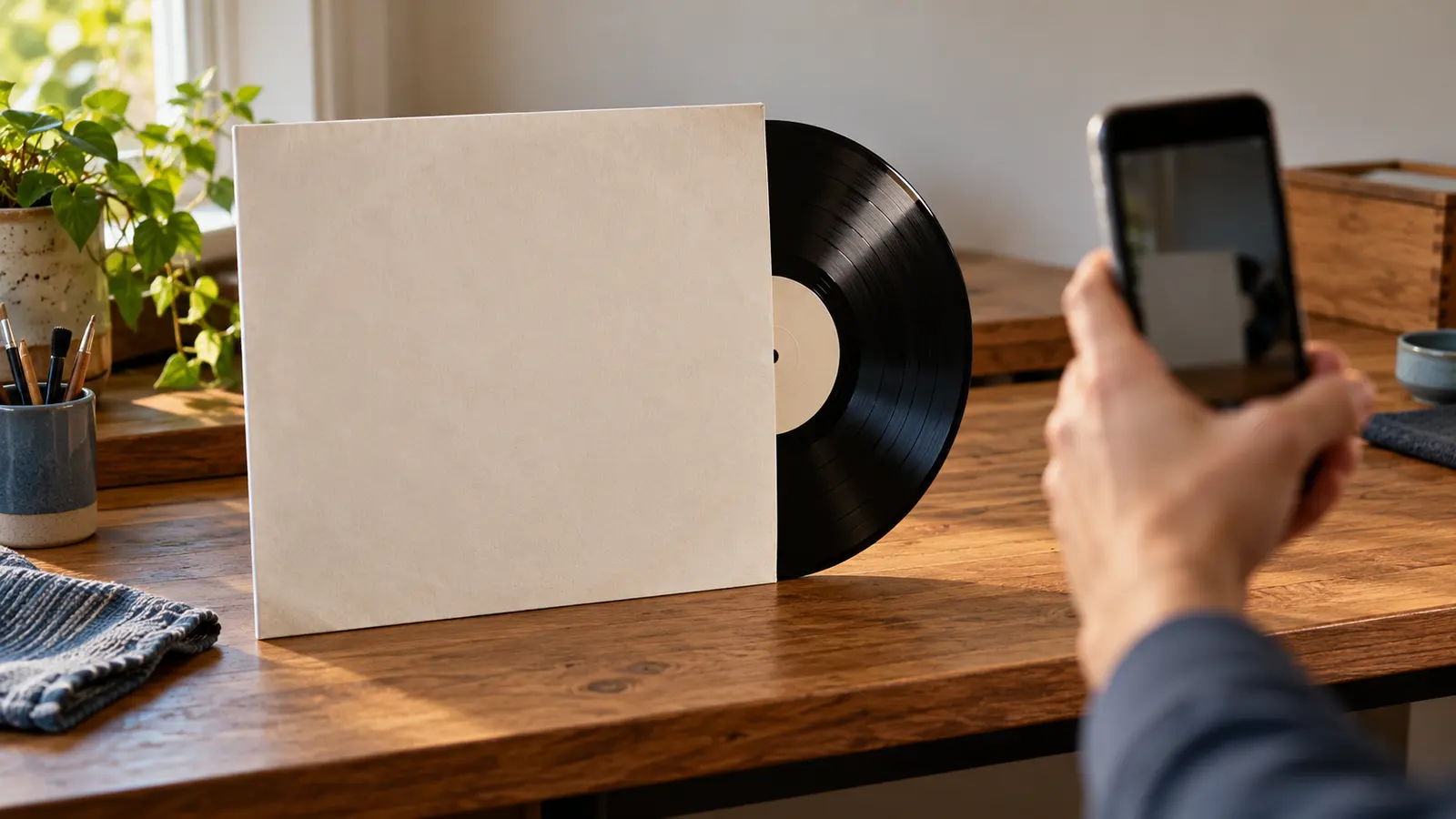
The safest way to organize an inherited vinyl collection is to preserve the evidence first, identify one physical copy at a time, and mark uncertain matches for review. Do not start by assigning values or throwing away duplicates. Photograph the sleeve, label and runout, give each copy a temporary ID, and build an inventory that another person can check later.
An inherited shelf often combines ordinary listening copies, different pressings, incomplete sets and records with personal notes. The goal of a first pass is a truthful map of what exists. DiscSnap can help you turn a cover or label photograph into a suggested record and save a checked item to a digital collection. Its result is a starting point; the physical copy remains the evidence.
What should you do first?
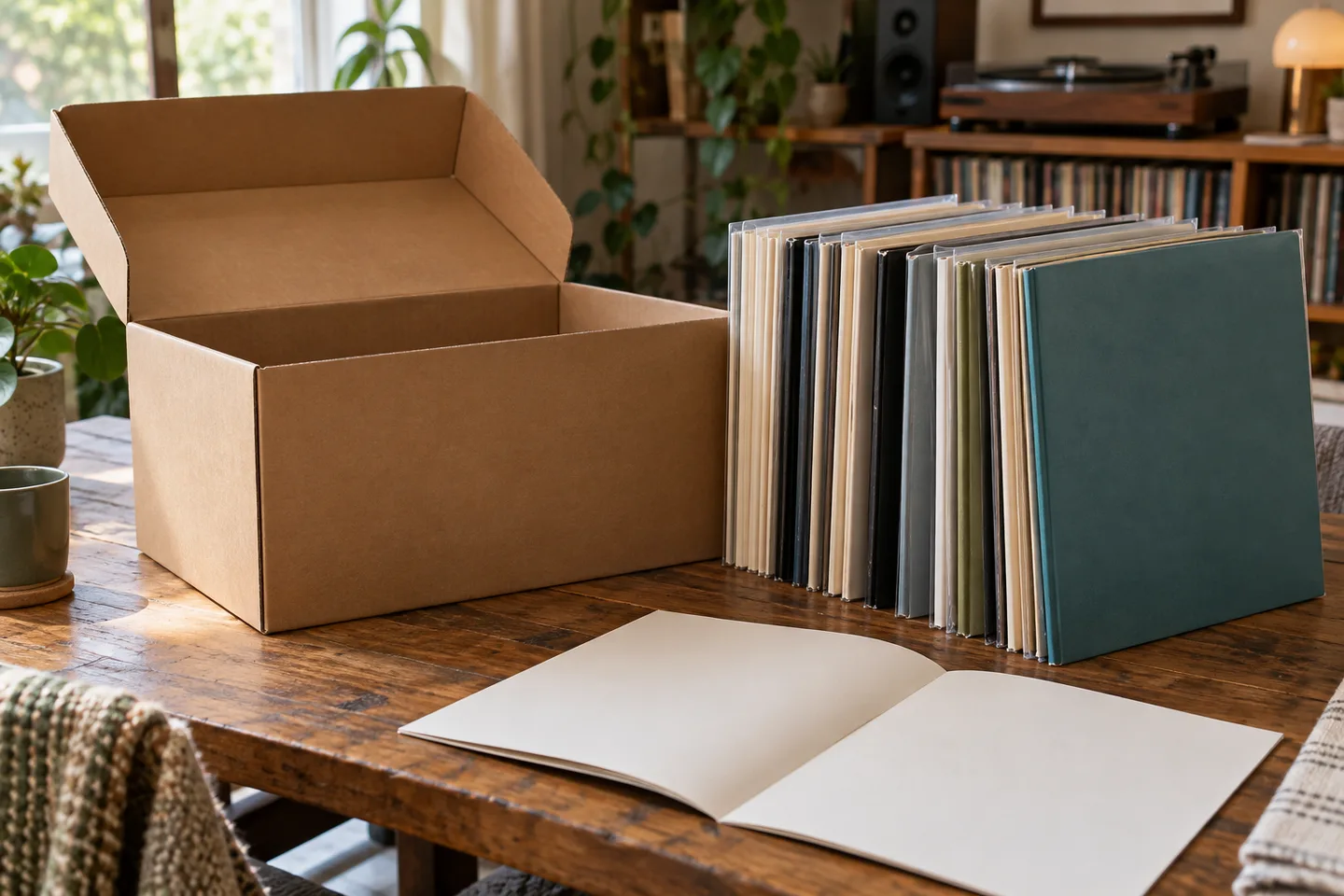
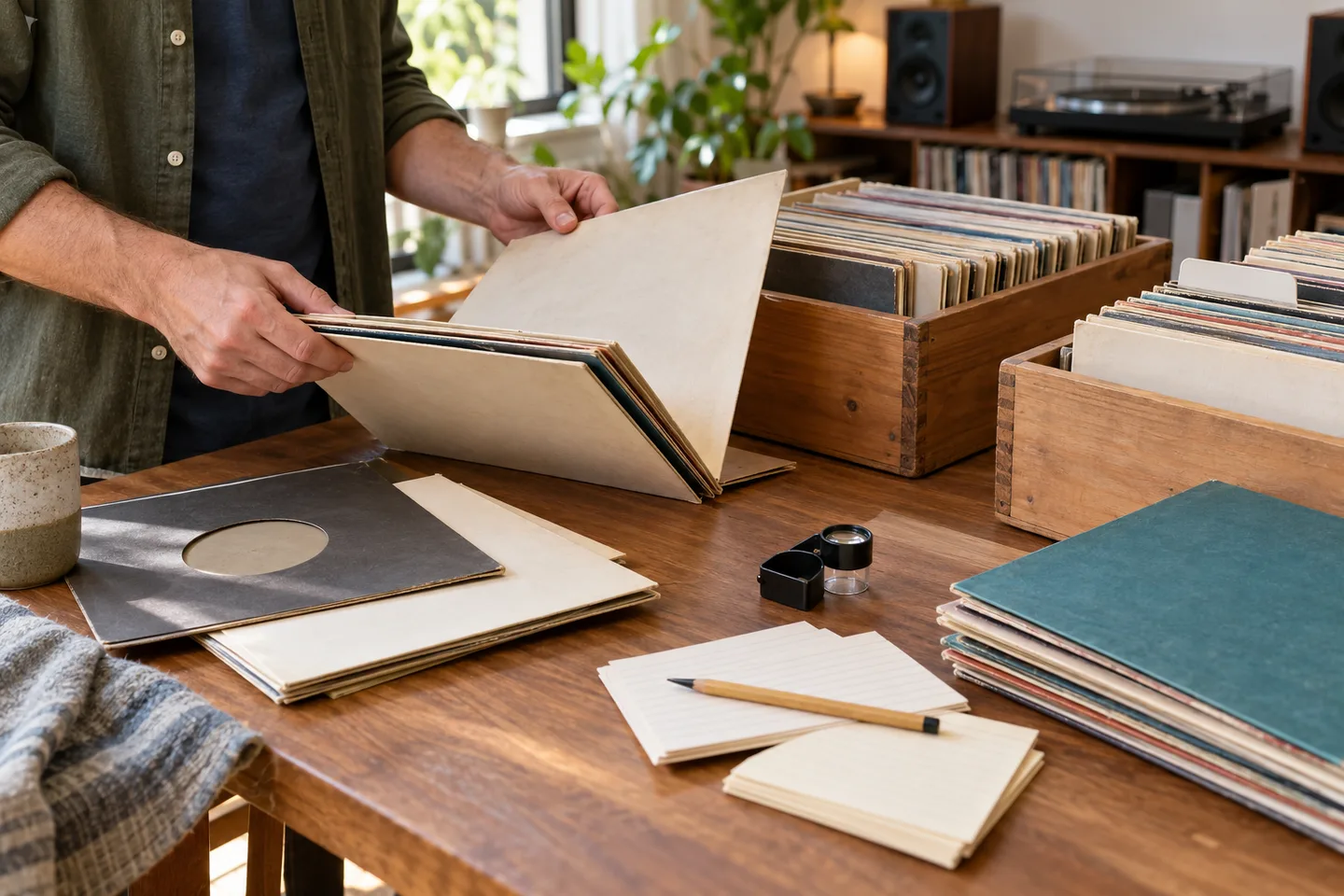
Protect the room and the records before researching. Keep discs upright, away from heat, moisture and direct sun. Wash and dry your hands, support a disc by its edge and label, and do not stack bare records on a table. Create three zones: to capture, captured, and needs review. Use a clean outer sleeve or a paper slip as a temporary batch marker, never adhesive on the record or jacket.
For each item, assign a stable temporary ID such as INH-001. Photograph the front, back, spine, label and any insert before moving it. A photo is valuable when a later catalog search raises a question about a different country, label or edition.
Which information belongs in the first inventory?
| Field | Record in the first pass | Why it matters |
|---|---|---|
| Copy ID | INH-001, INH-002 | Distinguishes physical copies. |
| Artist and title | Copy exactly from the sleeve and label | Prevents title-only assumptions. |
| Format | LP, 7-inch, 12-inch, EP or box | Narrows the possible release. |
| Label and catalog number | Include every letter, dash and suffix | Separates similar pressings. |
| Country and year | Record printed evidence; leave blank when unknown | Avoids invented certainty. |
| Media and sleeve condition | Note visible defects separately | Keeps the copy description useful. |
| Location | Shelf, crate or temporary box code | Makes the inventory findable. |
| Status | Verified, probable, needs photos, unidentified | Makes review work visible. |
Do not use a database master release as a substitute for a physical-copy record. Two copies of the same album are two inventory items when their condition, location or packaging differs. Keep the copy ID yours; any external release ID is only a reference to a catalog entry.
How can DiscSnap help with inherited records?
On iPhone, the public DiscSnap listing documents cover or barcode photography, release identification and saving scans to a collection. The Android listing documents cover or label images, identification, estimated market value and saving or exporting collection data. The listings do not establish identical controls on both platforms, a guaranteed match, or automatic verification of an inherited pressing.
Use a scan as a queue accelerator. Photograph a clear cover or label, read the suggested artist, title and release details, then compare the physical copy. If the result conflicts with the label, catalog number or format, keep the item as needs review. Never let a suggested value decide whether a record is discarded or sold. The current iPhone listing and Android listing are the primary product references; app screens and access rules can change.
How do you verify an uncertain match?
Work from broad evidence to narrow evidence. First compare artist, title, format and label. Then compare the catalog number, country, copyright text, barcode, insert and label layout. Finally inspect the dead wax and transcribe the matrix or runout exactly. The matrix and runout guide explains how to photograph and record those marks.
Discogs’ collection documentation distinguishes an individual release from a master release. Its label and catalog-number guidance recommends entering numbers as printed. Use those sources to structure a comparison, then check the photographs against your copy. A collaborative database is useful evidence, not proof that your item is the same pressing.
Example: a box contains two copies of the same title. One has a barcode and a later label design; the other has an older-looking sleeve but an unreadable matrix. Record both as separate IDs. Mark the first “probable” after the label and catalog number agree. Mark the second “needs matrix photo.” This preserves the collection without turning an impression into a claim about an original pressing.
How should duplicates, sets and missing pieces be handled?
Keep duplicates until the inventory is complete. A second copy can have a different pressing, cleaner media, a replacement sleeve or sentimental importance. For a box set or multi-disc album, photograph the outer box and each label, check the expected contents, and add a contents note. Do not invent a dedicated box-set mode or assume a scan represents every disc.
If an insert, inner sleeve or disc is missing, write that fact in the note and keep the item’s status visible. Avoid “complete” until you have checked the contents. The duplicate-copy guide and cataloging guide cover copy IDs, shelf locations and a second-pass review.
What is a manageable inherited-collection workflow?
Use batches of 20–40 records. Finish the first pass before opening a long research session:
- Photograph and assign the copy ID.
- Record title, format, label, catalog number and location.
- Scan or search for a suggested release.
- Compare the result with the physical evidence.
- Mark verified, probable or needs review.
- Move the copy to the captured zone and save a dated backup of your inventory.
At the end of each batch, count physical copies against rows. A missing row is an inventory problem; a row marked “unidentified” is honest progress. Use the pressing-verification guide for the difficult second pass and the value-estimate guide only after the edition and condition evidence are recorded.
An inherited collection deserves careful description before conclusions. DiscSnap can reduce repetitive searching, while your photographs, notes and copy IDs keep the record accountable. When a match remains uncertain, preserve the uncertainty and the evidence so the next review can improve it.
How do you sort the physical room?
Choose one staging table and keep the rest untouched. Use acid-free slips for IDs, stand jackets vertically, and isolate damp or damaged items. Photograph the whole object before close-ups and tie each filename to its copy ID. If title, format, label and catalogue number agree, mark probable; if matrix and sleeve also agree, mark verified; if one key field conflicts, mark needs review. Write not visible instead of guessing a country or year.
What happens after the first inventory?
Create a second queue for better photographs, matrix readings and contents checks. When several database results are close, save the alternatives and record which physical detail will decide between them. Only after identity and condition are documented should you prepare a sale, donation or handover. The valuation guide explains why an app estimate is not a guaranteed offer. Keep your own price and terms separate from the estimate. This guide gives no legal, tax or appraisal advice.
A handover should include the dated inventory, photo folder, unresolved questions and location key. Keep one offline copy. If family members disagree, preserve both notes and pause the conclusion.
How should you prepare a family handover?
Create a short read-me page for the next person: explain your ID format, the shelf code, the meaning of each status and the date of the last review. Keep the original photographs beside the inventory rather than embedding only a compressed preview. If a relative asks which records are important, point to the evidence and the listening history rather than a guessed price. A record can matter because it belonged to someone, even when no database match or market estimate exists.
Before moving boxes, photograph the empty shelf and the filled shelf. Record any temporary location change. For records with mould or water damage, isolate them and seek specialist handling; do not clean aggressively to reveal a matrix. This simple chain of custody makes later cataloging safer and keeps a family archive understandable.
A useful status vocabulary prevents accidental conclusions. “Verified” means the observed identifiers fit one release; “probable” means the main clues fit but one check remains; “unidentified” means there is not enough evidence; and “needs photos” means the next action is obvious. Put the date and reviewer initials beside a status so a later family member can understand who made the decision. This is especially helpful when the collection contains handwriting, old shop stickers or sleeves that were paired incorrectly.
Do not clean a record simply to improve a photograph. A dry, gentle dust removal may be appropriate for ordinary handling, but mould, residue and water damage can require specialist advice. Photograph the condition as found, isolate affected items and keep damaged sleeves from touching clean jackets. Accurate condition notes help a later conversation about care without pretending to be a laboratory assessment.
A small fictional example
Suppose a family shelf contains three copies of the same album. Copy INH-011 has a barcode and a modern label; INH-012 has an older sleeve but no readable matrix; INH-013 is a clean disc in a replacement jacket. The inventory keeps three rows, records the differences and links each photograph to its ID. Only INH-011 becomes probable after the catalogue and label agree. The other two remain open until better evidence appears. This prevents a visually attractive sleeve from being attached to the wrong disc.
When a batch is finished, save a dated export and write the next action beside every open row. A clear queue turns a large inherited room into manageable research instead of a series of guesses.