
The safest routine is simple: store records upright and fully supported, keep them cool and dry, handle only the edge and label, and clean only when dirt is present. For an ordinary modern PVC LP, use a clean anti-static brush for loose dust and a purpose-made wet-cleaning system for fingerprints or grime. Do not use a mystery solvent, scrub the grooves, or treat every grooved disc as vinyl. Shellac 78s and lacquer (acetate) discs need different decisions, and a damaged disc may need a conservator rather than another home remedy.
This guide follows the Library of Congress handling guidance and the Canadian Conservation Institute’s preventive recommendations for recording media. Those sources emphasize identification, clean equipment, appropriate enclosures, and avoiding unnecessary treatment.
Identify the disc before you clean it
Most 12-inch LPs and many 7-inch singles made after the 1950s are PVC-based vinyl. They are comparatively tough, but their modulated grooves still scratch easily and retain residue. A 78 rpm disc may be shellac, a resin composite with abrasive fillers, or (later) vinyl. Shellac is brittle and can be damaged by water soaking or aggressive brushing. A lacquer or instantaneous disc is a coating over a rigid core; the coating can crack, delaminate, or carry historic content that cannot be replaced.
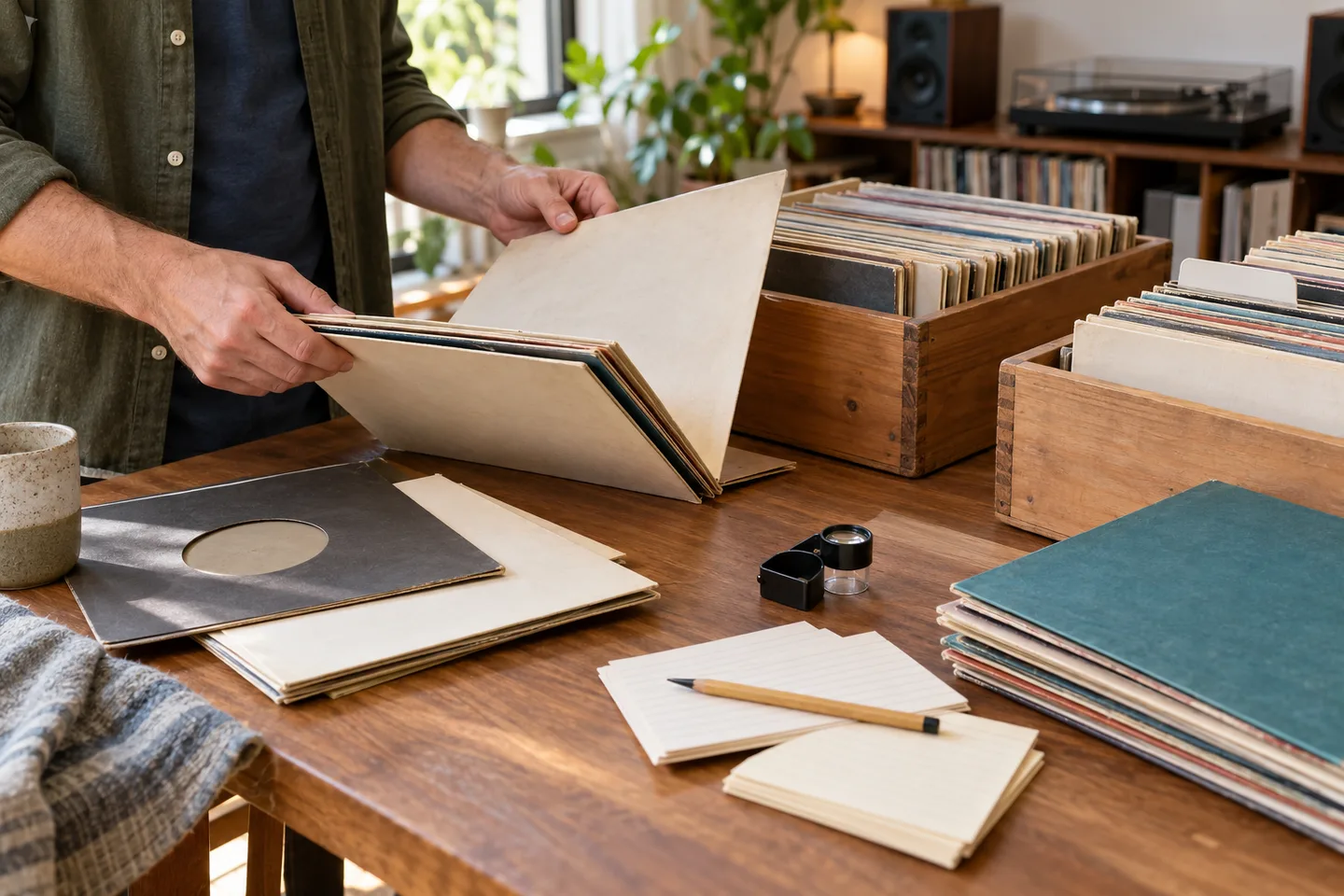
Check the label, speed, date, weight, and surface before treatment. A coarse-groove 78 is not a 33 rpm LP, and an acetate with a white, waxy deposit is not simply a dirty modern record. If the surface is flaking, sticky, powdery, cracked, or lifting from the core, stop. Photograph it, isolate it from clean records, and ask an audio-preservation specialist. Do not “repair” a warp with an oven, heat gun, household iron, or stacked weights; heat and pressure can destroy the groove and label.
Build a stable storage environment
Store records vertically, like books, with shelf support as tall as the discs. Keep a row snug enough to remain upright but loose enough that you can remove one without levering its neighbors. A record that leans for months can deform; a tightly packed row can put pressure on jackets and edges. Use dividers for short rows and support both ends. Never keep LPs in a horizontal stack for long-term storage.
Choose the coolest, driest room with the least fluctuation. CCI advises keeping grooved media below about 23°C and around or below 50% relative humidity; a practical home target is a stable 18–21°C and 35–50% RH. A small hygrometer is more useful than guessing. Avoid attics, basements, exterior walls, radiators, heating vents, and direct sun. Heat accelerates deformation and shellac shrinkage; high humidity encourages mould, while rapid changes stress sleeves and disc layers.
Leave records in their enclosures and let a disc acclimate before playing if it has come from a substantially colder or hotter place. Remove factory shrink wrap that is pulling a jacket inward; it can contribute to warped records. Keep food, drinks, smoke, and dusty maintenance work away from shelving. Vacuum the room and shelf around the collection, but do not spray cleaner near records.
Use compatible sleeves and jackets
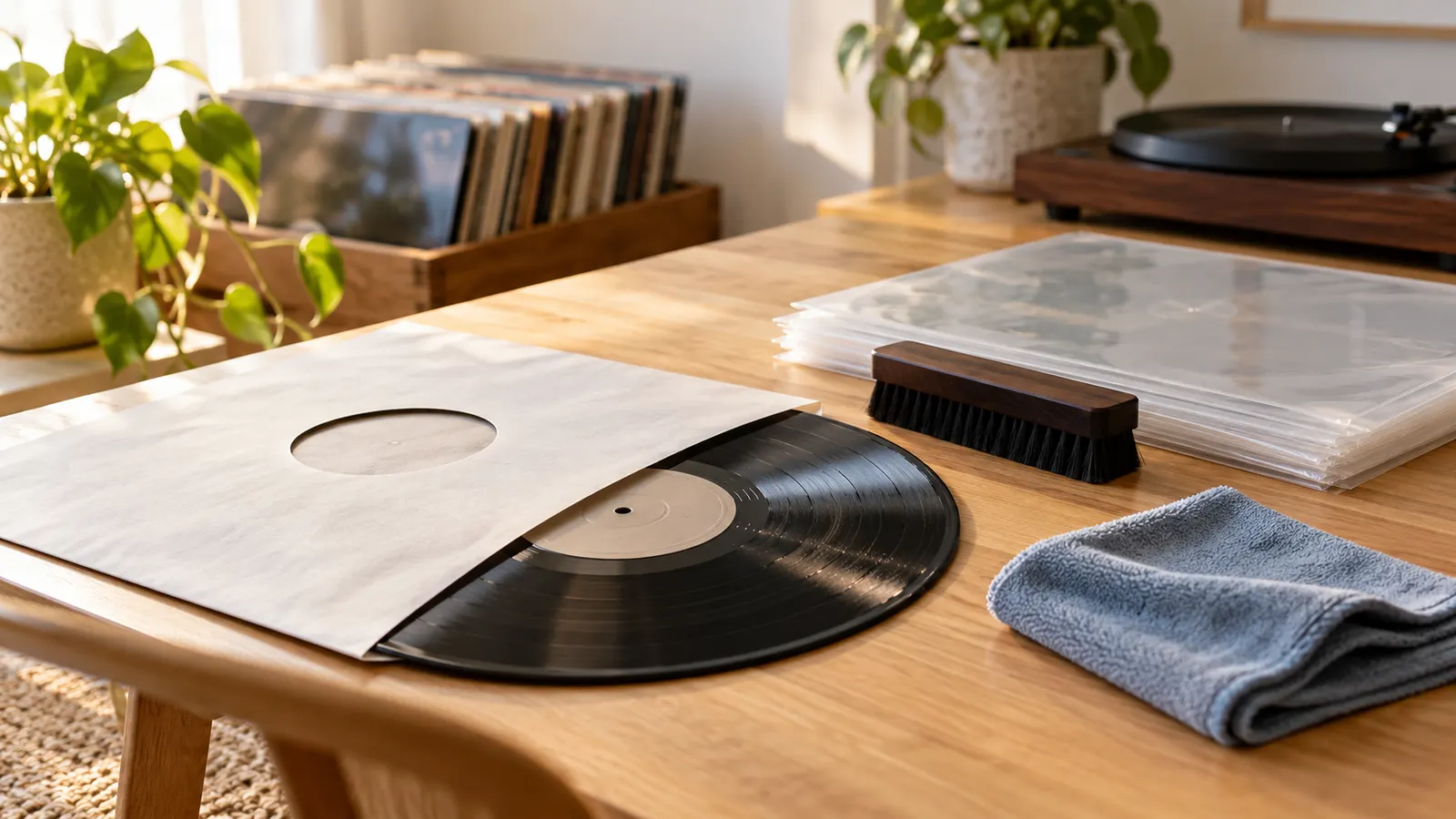
The record and its original paper jacket serve different purposes. Preserve the jacket, labels, inserts, and provenance, but give the disc a clean, inert inner sleeve. Uncoated paper can shed fibers and abrade a disc as it is removed. A smooth, anti-static polyethylene or polypropylene sleeve is a sensible choice for a modern LP. Store the sleeved disc beside the jacket inside an outer jacket sleeve if that prevents seam splits and ring wear.
Avoid PVC sleeves and unknown soft plastics. Plasticizer can migrate from PVC and leave an oily film or stain on recording surfaces, especially when pressure and warmth keep materials in contact. Archival guidance therefore favors inert polyethylene or polypropylene and warns against acidic, dusty enclosures. Do not seal a damp jacket in plastic: air-dry it in a clean, shaded area and deal with mould separately.
For an old or historically important sleeve, do not throw it away. Place a polyethylene interleaf between disc and original sleeve if this can be done without tearing it, then retain the original materials together. Keep rare inserts flat and separate from the playing surface. Inspect sleeves for grit, insect debris, or mould before sliding a cleaned record inside.
Handle the disc and equipment
Wash and dry your hands, then hold a disc by its outer edge and label area. Never touch the grooved surface: skin oil attracts dust and leaves a film that a stylus can spread. Put the disc on a clean, lint-free mat. Keep the platter, mat, spindle, stylus, and record brush clean; dirty playback equipment can scratch a disc even when the disc itself was clean. Follow cartridge tracking-force and alignment instructions, and lower the cueing lever rather than dropping the stylus.
Before each play, use a clean anti-static brush or soft record brush with almost no downward pressure. Let the record rotate and draw loose dust toward the outer edge, then lift the brush away. Replace or wash the brush when visibly dirty. A dry pass is for loose particles, not fingerprints, smoke film, or embedded grit. Compressed air can drive debris into a groove and is not a cure for a dirty record.
Wet-clean a modern vinyl LP carefully
Wet cleaning makes sense for oily fingerprints, dried residue, or persistent crackle caused by dirt. A record-cleaning machine with a vacuum or controlled fluid removal is the most repeatable home approach. Systems differ, so follow their fluid, brush, and rinse instructions. Use separate clean brushes for dirty and clean records, and protect the paper label from liquid.
For hand cleaning, use distilled or deionized water and a record-specific, residue-controlled product. Wet the groove area without flooding the label. With a soft, non-abrasive pad, work in the direction of the grooves with light pressure; do not scrub across them. Rinse with clean distilled or deionized water if the product requires it, then remove liquid with a clean vacuum system or lint-free drying method. Stand the disc vertically until completely dry before sleeving it.
There is no universal kitchen recipe. Dish detergent can contain dyes, perfumes, salts, or surfactants that leave residue. Tap water can leave minerals. High concentrations of alcohol or untested solvents can affect labels, residues, or older materials. CCI notes that professionals may use controlled water, surfactant, or low-level alcohol processes followed by a deionized-water rinse; that is not a reason to pour a homemade mixture onto a valuable record. Never use acetone, ammonia, bleach, furniture polish, window cleaner, abrasive melamine foam, or household steam.
Clean one test record first. After it dries, check for haze, streaks, tackiness, or new noise. If the result is worse, stop and change the method rather than repeating it across the collection. Wet cleaning removes contamination; it cannot remove groove wear, fill a scratch, restore a worn lacquer, or turn a poor pressing into a better one.
Treat shellac and lacquer discs as special cases
Do not put a shellac 78 through a vinyl-focused bath without checking the machine and fluid. Shellac can be water-sensitive and brittle; its abrasive filler can be loosened by careless treatment. Start with a soft dry brush and consult a 78 rpm specialist for any wet process. Use the correct stylus for the groove and never assume an LP stylus is safe.
Lacquer or acetate discs deserve more caution. Their coating may be swollen, cracked, or delaminating, and a white crystalline deposit can signal chemical deterioration rather than surface dirt. Do not peel, burnish, flatten, or polish the coating. If the recording matters, prioritize a preservation transfer by an experienced engineer and keep the original in stable storage. A professional can identify the substrate and choose a reversible, documented method.
Keep a care and inspection log
Before a record returns to the shelf, confirm its format, speed, label, and obvious damage; photograph a warp, crack, stain, or unusual deposit; note the cleaning method, fluid, date, and result; use a clean inner sleeve; and check that the jacket is dry. Play only after the record and equipment are clean, and stop if the stylus mistracks.
Logging care alongside edition details makes later grading more honest. Use the Goldmine grading guide for condition language, the sleeve-condition guide for jacket notes, and the matrix runout guide when documenting a pressing. The original pressings versus reissues guide explains why cleaning cannot substitute for identifying an edition, while the turntable calibration guide covers playback setup.
DiscSnap can help you identify and organize records you have cared for. Find it on the App Store and Google Play; record your own condition observations separately from asking prices or historical sale records.
Good preservation is mostly restraint: stable storage, compatible sleeves, clean playback, and a documented decision to stop when a material is uncertain. Those habits protect the sound and the evidence of what each record is, without promising a miracle repair.
Decide when to leave a record alone
Not every mark needs treatment. A light paper scuff may be cosmetic, while a groove that mistracks is an audio problem; cleaning cannot reverse either kind of wear. Compare a suspected contaminant under a bright, angled light, and listen only after checking the stylus and tracking force. If a record is valuable, unique, historically significant, or made from an uncertain material, document its condition before experimenting. A conservator or archival transfer engineer can often save more information by declining an aggressive cleaning than by trying to make a surface look new.
Keep cleaned records separate from the “to inspect” queue until they are dry and sleeved. If mould is present, isolate the jacket and nearby items, improve airflow, and seek specialist advice rather than brushing spores through the collection. Your goal is a stable, clean record that can be played safely—not a glossy surface achieved at the cost of the groove.
Editorial method: This guide synthesizes the Library of Congress and Canadian Conservation Institute care guidance cited above, alongside the linked Goldmine, matrix, pressing and turntable references. It is a source review, not a hands-on cleaning or listening test.