A useful vinyl collection insurance inventory connects each physical record to its edition details, condition, photographs and available ownership documents. Keep dated copies somewhere you can access if your records and phone are unavailable. Then ask your insurer which evidence, valuation basis and policy limits apply to your collection.
DiscSnap fits the first part of that process: identifying records from cover or label images and organizing a saved collection. That list becomes an index for a separate evidence folder. A suggested match still needs checking against your copy; neither an app entry nor a market estimate establishes coverage or replaces an appraisal requested by an insurer.
Start with the policy questions
An everyday catalog helps you find albums. An insurance inventory should help someone unfamiliar with your shelves understand what existed, which edition it was and what supports your description. Our collection cataloging guide explains the initial capture process; this guide adds the evidence and review steps.
Before spending hours on a format your insurer cannot use, ask:
- How does the policy classify records and collections? Are personal belongings and records held for sale treated differently?
- Are there collection, category or single-item limits? What deductible or excess applies?
- What basis determines a payment: replacement, depreciated value, an agreed amount or another definition?
- Does the insured location include an external storage unit? What about records on loan, in transit or at an event?
- When is a professional appraisal required, who may prepare it, and how recent must it be?
- Which inventory format and ownership documents should you retain, and how should you report changes?
Record the answers, date and relevant policy wording. Do not assume that a photograph changes a limit or adds flood, theft, accidental-damage or transit coverage. The UK Association of British Insurers’ contents guide discusses inventories, single-item limits and evidence considered during claims. It is a useful UK example, not a description of every policy worldwide.
Give each physical copy a stable identity
Use one inventory row per owned copy, with a simple ID such as REC-0142. This personal identifier is different from a database release number, which can describe many identical copies. Put the ID on an outer protective sleeve or shelf marker, never directly on the record or original jacket.
Keep a companion sheet with these fields, even when your collection list lives in an app:
| Field | Hypothetical example or instruction |
|---|---|
| Copy ID | REC-0142 |
| Artist, title, format | Transcribe the physical sleeve; LP, single or box set |
| Edition evidence | Label, catalog number, country/year if established, runout transcription |
| Identification status | Probable match; side B inscription still needs checking |
| Condition | Record and sleeve separately, dated, with visible defects |
| Acquisition | Date, seller or gift/inheritance note; receipt reference if available |
| Location and ownership | Room/shelf code; owned, loaned out or held for someone else |
| Evidence references | Photo filenames, receipt file, appraisal and research dates |
| Last review | Date checked against the physical copy |
The example ID is invented and carries no valuation. Leave unknown facts marked unknown instead of supplying a plausible year or purchase price. A readable list with unresolved details is better than a polished list that quietly converts guesses into facts.
For the identification step, open DiscSnap on iOS or Android, use cover or label identification, and save the matching record to your collection. Verify the physical edition, then record the corresponding saved-entry reference alongside your Copy ID in the companion sheet. Store photos, receipts and insurance notes in the separate folder; this workflow does not depend on the app supporting attachments or custom insurance fields.
Verify editions before researching amounts
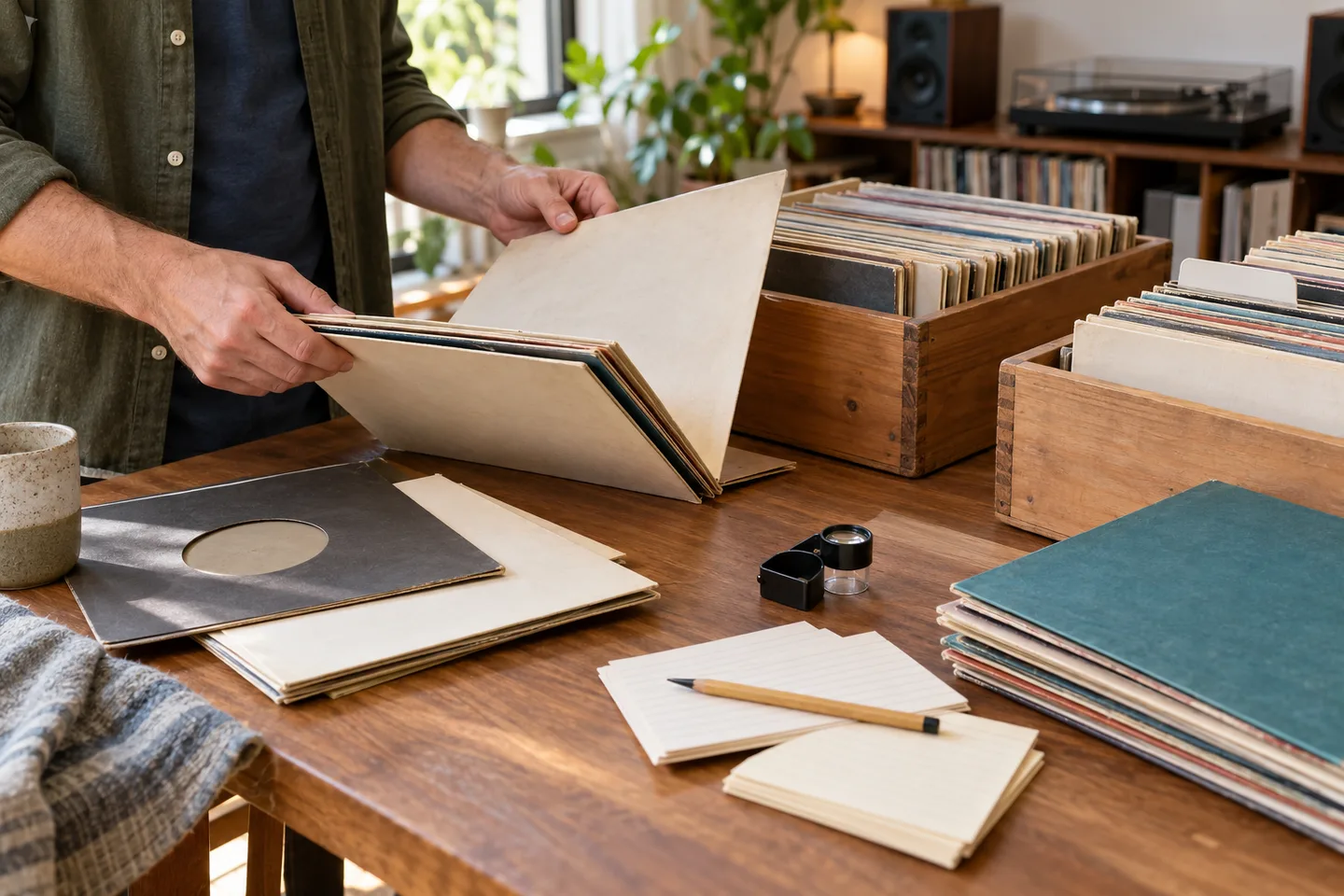
Album titles alone are insufficient. An original pressing, a later reissue and a modern edition may have similar artwork. Compare label design, catalog number, format, country information and sleeve text before choosing a database match. Use our originals and reissues guide to organize that comparison.
Where the edition remains uncertain, photograph and transcribe the runout. Our matrix and dead-wax guide explains where these markings sit. Record both sides and preserve unclear characters as uncertain. Do not interpret a scan as authentication or infer a valuable variant from a partial match.
Record media and sleeve condition separately. Follow consistent terminology from the record grading guide, but add plain descriptions: split seam, writing on label, missing insert, audible repeating click. State whether you inspected visually or listened, and when. A grading abbreviation without an inspection date gives a reviewer less context.
Photograph the collection and its distinguishing details
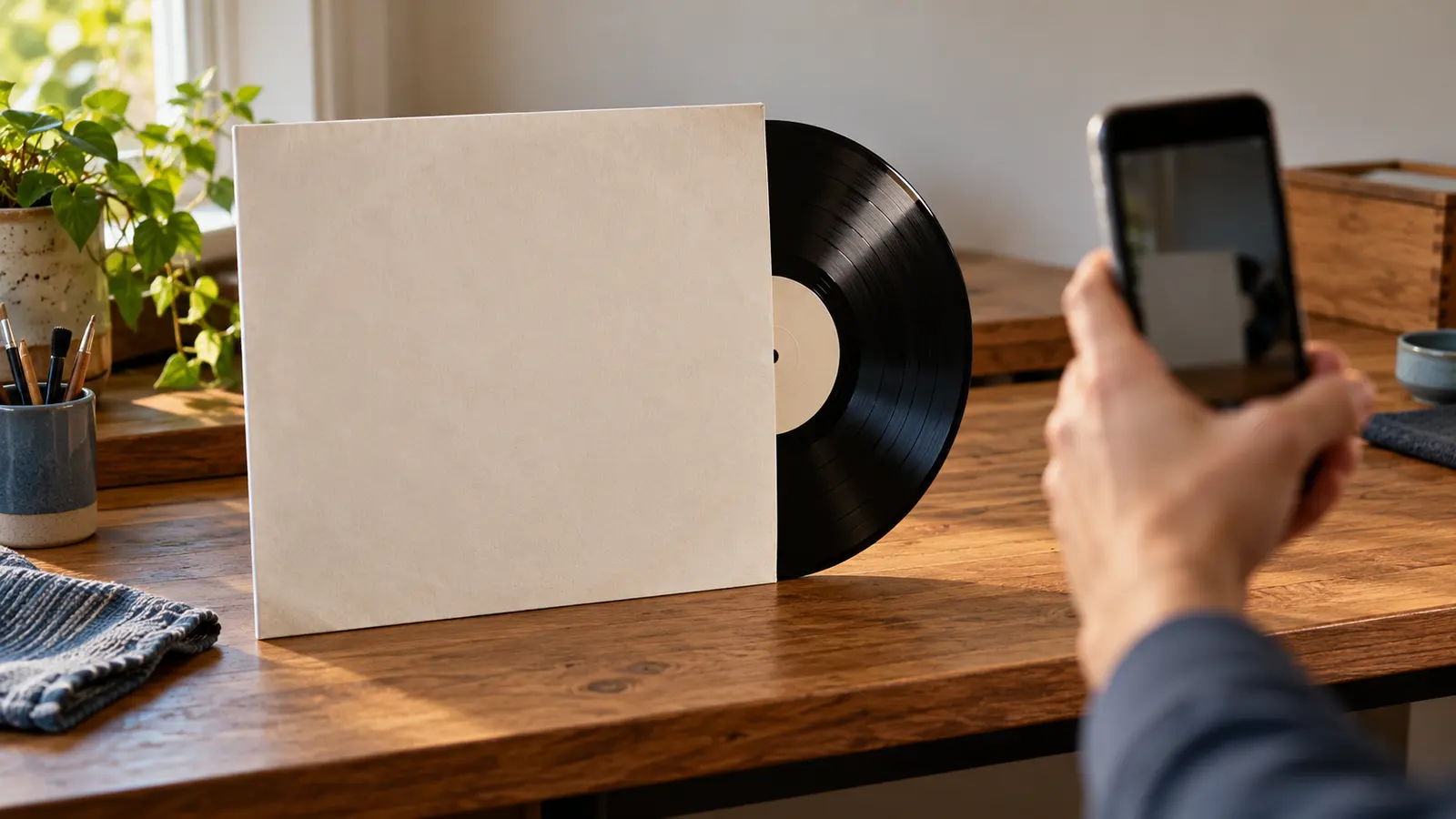
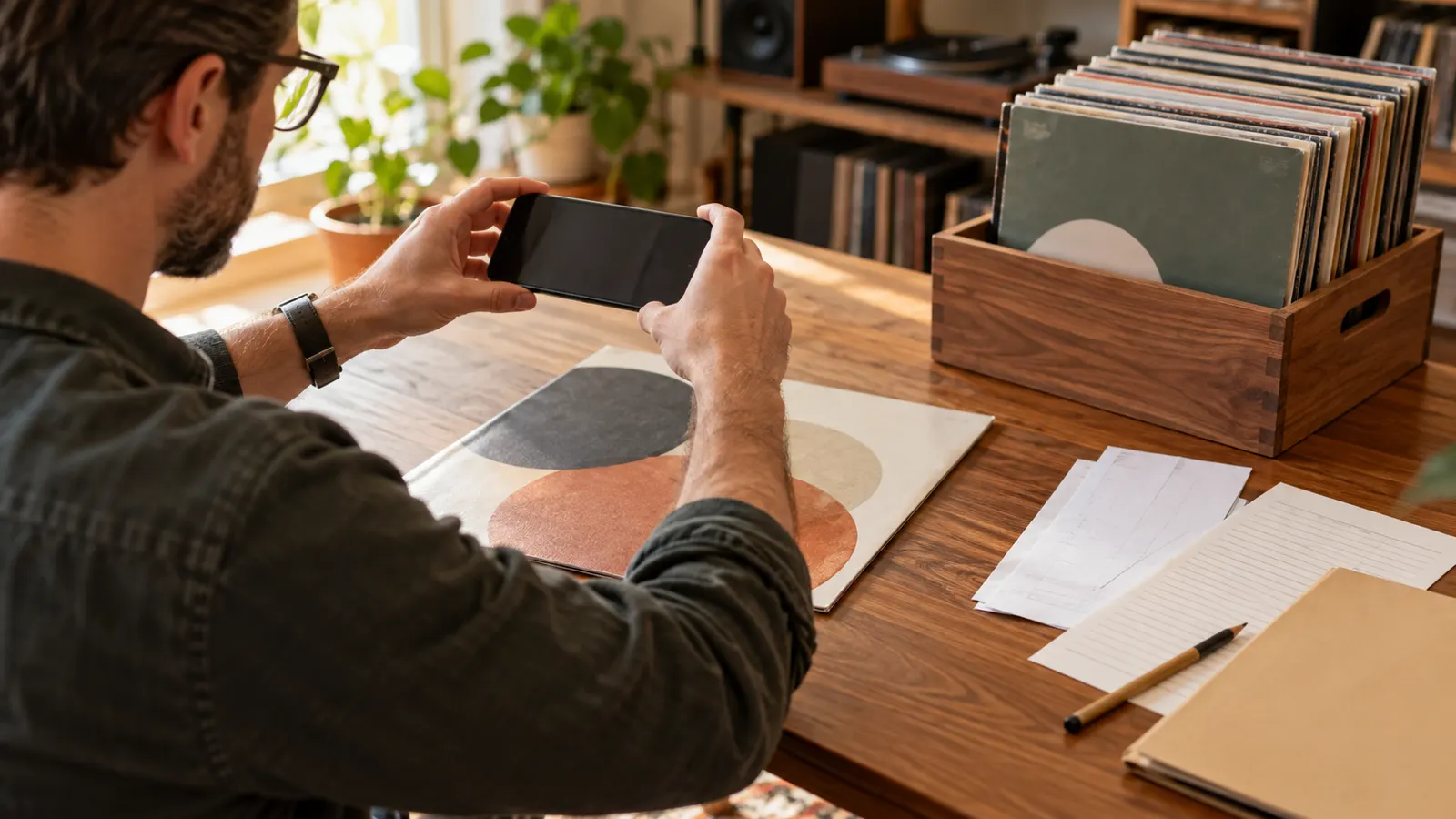
Start with overview photographs showing shelves and storage locations. Then capture individual covers, backs, labels and edition-specific details. For a box set, include the outer box and contents laid out safely. Photos should make the description easier to check, not merely show an attractive listening room.
Use even light, check focus and review the image before returning the record. Name files consistently, for example REC-0142_label-A_2026-10-23.jpg. Capture damage honestly and retain original files. If you crop or brighten a working copy for readability, keep the original alongside it. Avoid filters that obscure marks or change the apparent condition.
The US Insurance Information Institute’s home-inventory guide recommends photographs, item descriptions, receipts and secure backup copies. Applied to vinyl, this means connecting photographs to individual rows rather than leaving hundreds of unlabelled images in a phone gallery. Photography supports the record; it does not independently establish purchase price or every ownership fact.
Handle records by their edges and label areas while documenting them. Keep the work surface clear and return items to suitable sleeves. Our storage and cleaning guide covers routine care; an inventory session should not introduce avoidable handling damage.
Separate duplicates, box sets and ownership status
Two copies of the same pressing need different Copy IDs because their condition, acquisition and locations may differ. Link them to the same edition reference if appropriate, but do not duplicate one receipt across two purchases without explaining what it covers.
For a box set, choose a parent entry with a contents checklist. If individual discs have child rows, clearly exclude those rows from any total that already includes the complete set. Count the collection consistently: boxes, releases and individual discs are different measures. Note missing booklets, replacement sleeves or incomplete sets explicitly.
Separate owned records from a wish list and from items borrowed or held for sale for another person. Keep loan dates and the owner’s name privately. Ask the insurer how each arrangement is treated; physical possession alone does not answer that question.
Keep acquisition evidence without filling gaps with fiction
Save receipts, invoices, order confirmations and relevant correspondence using the Copy ID. If one receipt covers several records, list the related IDs and preserve the whole document. A purchase total may include postage or other items, so record what the amount represents rather than assigning it automatically to one record.
For a gift or inherited collection, describe how and when you received it, distinguishing remembered dates from documented ones. Keep available letters, photographs or estate records separately and ask which evidence the insurer accepts. Missing receipts are a reason to discuss alternatives, not to invent a price or assume a claim must succeed or fail.
If you later discover that the jacket and disc do not belong together, record the correction and date. Preserve the earlier evidence with an explanatory note so changes can be understood.
Keep four kinds of value separate
The price you paid is a historical fact when supported by a receipt. Market research is an observation about comparable copies at a particular time. A replacement estimate is your documented attempt to identify a suitable replacement under a stated assumption. A professional appraisal is a separate assessment with its own scope and date.
Do not merge these into an unexplained “value” column. For research, save the source, date, currency, edition, condition and whether an amount is an asking price or completed sale. Our vinyl valuation guide explains why comparisons need matching editions and condition. Scarce listings may leave uncertainty; show it instead of treating the highest advertised price as a settled figure.
Ask the insurer what basis is relevant before totaling the sheet. Record appraisal references and review dates where requested. A changing app estimate or marketplace listing should not silently overwrite an agreed or professionally assessed amount.
Make the evidence recoverable and private
Keep at least one current copy away from the collection’s physical location. A second device in the same room may share the same loss. Check the storage service’s access and recovery process rather than assuming synchronization alone protects every file.
The US NAIC home-inventory guidance explains how an organized inventory can assist a claim. Check how you will retrieve the information independently of the device used to create it.
Store the companion sheet, photo folders and document index together. Protect accounts with strong authentication and restrict sharing. Remove unnecessary address or payment details from copies shared for informal advice while retaining original documents securely. Avoid public links that expose a valuable collection and its storage location.
Test recovery: open the saved sheet and a few photographs from the backup location, then locate a receipt by Copy ID. Keep access instructions available to a trusted person where appropriate, without placing passwords in the inventory itself.
Maintain it, and know what to do after a loss
Update entries when records arrive, leave, move or change condition. Review the collection at policy renewal and after significant acquisitions. Reconcile a shelf against the sheet, remove sold items from current totals, and retain a dated archive explaining changes. Ask about appraisal renewal separately; a personal review date does not renew an appraisal.
After a loss, prioritize safety and contact the insurer for its process and deadlines. Preserve available pre-loss records, photograph damage when safe, and keep communications and expense documents. Ask before discarding damaged records or undertaking restoration that could remove evidence. Do not re-enter an unsafe space to retrieve paperwork.
Before calling the inventory ready, confirm that each owned copy has an ID, unresolved editions are labelled, evidence files open, box sets are counted once, amounts state their basis, and an accessible backup exists. Finish by checking outstanding policy questions with the insurer. That produces a usable documentation system rather than a list of album titles.
Editorial method: DiscSnap Team reviewed the cited NAIC, Insurance Information Institute and ABI guidance on 23 October 2026 and adapted the documentation principles to physical records. Examples are hypothetical. This is source-based editorial guidance, not a tested claim submission, insurance recommendation or professional valuation.